Does your enterprise ever consider leveraging collateral to access large-scale capital? Do you know- you should thank your assets because they can help your business in generating large-scale capital. But, before knowing that, we should understand what Collateral is and how it helps our business.
Collateral is an asset that a business plans to secure a loan, such as property, machinery, or receivables. It helps businesses access larger funds than unsecured loans allow, reduces lender risk and bridges the funding gap, enabling enterprises to invest in growth, scale operations and pursue new opportunities confidently.
At this time, businesses require significant funds to scale operations to grow and reach farther, invest in advanced technologies, or capture new markets. Still, unsecured loans in a business frequently fall short due to limited credit sizes and higher risk assessments that reduce the chances of growth.
For instance, a mid-sized manufacturing firm is poised to expand production to meet increasing orders. While its business fundamentals are strong, unsecured lending may be insufficient to fuel this growth. Collateral-based financing provides a practical solution, allowing enterprises to pledge assets such as property, machinery, or receivables to secure larger loans.
This approach bridges the gap between rising capital requirements and available funding, mitigating lender risk while empowering businesses to pursue ambitious growth strategies. By transforming financial constraints into opportunities, landowner-backed collateral solutions are emerging as a vital tool in driving India’s enterprise expansion and economic development.
What Is Collateral Support?
When we talk about collateral, we end up thinking of losing assets and gaining liability, but that is not the full truth. Collateral support for businesses refers to an asset a borrower pledges to a lender to secure a loan.
This collateral support acts as a guarantee that the lender (like private banks, businesses, or VC) can seize and sell if the borrower defaults on the repayment term. In simple terms, landowner-backed collateral reduces the risk for lenders and also builds trust between lenders towards the business in the market because of collateral security.
The types of collateral in India that are commonly accepted in business funding are divided on the basis of value, liquidity and stability. Let’s understand that now,
- Real Estate and Fixed Assets: This is one of the strongest and most stable forms of collateral, as it tends to appreciate or can hold value for a long time. Now, it is also divided into two types:
- Land and commercial property: This includes undeveloped land, office buildings, retail spaces, warehouses and other properties that are owned by the business.
- Industrial Assets: This covers specialized property like manufacturing plants, factory buildings and industrial complexes.
- Business Equipment and Machinery: This is for manufacturing or logistics businesses, as it happens that lenders often consider the age and depreciation of the equipment, often lending only a percentage of its appraised value.
- Heavy Machinery and Vehicles: In the business of manufacturing or logistics, where equipment is the main asset of the firm, then that places this equipment and machinery as collateral for business funding.
- Current assets (Working Capital): Working capital is short-term liquid assets that are best for retail business owners. This point includes;
- Inventory: In this, we include raw materials, work-in-progress and finished goods, which is very common for retailers and manufacturers. It also includes a sub-point that is a caveat.
But the question that arises now is, we learn collateral and collateral support for businesses, both, so what is the difference between them? Simply, we can say that collateral refers to tangible assets pledged by a borrower to secure a loan. And, Collateral Support involves a more complex arrangement where collateral may be combined with additional guarantees to secure lending.
Why Collateral Is Critical for Large-Scale Capital Access?
Many businessmen think that collateral is critical for large funding, but it's not true, as collateral plays a pivotal role in securing access to significant funding (Guarantee assets reduce lender risk, often leading to lower interest rates and larger loans). For big projects or to grow a business, collateral support for businesses is important. It doesn't just offer financial security (business growth capital); it also shows that the borrower is trustworthy and serious. This makes it a key part of getting the necessary funds.
Suppose a business wants a higher loan amount of some ₹10 crore to ₹500+ crore, now many people will think this much amount is not possible with collateral support. This is possible and feasible only when a borrower provides strong collateral, like high-value real estate or industrial assets, or large-scale machinery that needs to reduce the lender’s risk and serve as a guarantee and build trust.
Without such strong collateral, it is not guaranteed that your business will get the funding faster. Landowner-backed collateral lowers the lender's risk and makes the approval faster, as without such backing, any lender is unlikely to approve business growth capital, like landowner-backed collateral provides:
- Tangible guarantee to the lender that the loan can be recovered in case of default.
- Collateral support for businesses assures faster approval of funding with more efficiency and confidence.
- Chances of getting a higher loan amount approval with strong collateral support and more favourable terms for borrowers.
Now, when a lender provides funding to a business on behalf of their landowner-backed collateral, a lender also asks for a report of the business’s plans, projects and growth structure. Because if a business defaults or becomes bankrupt or is unable to pay back the loan, then the collateral they provided to the lender becomes their safe path, not only for the business but also for the lender.
After understanding what collateral is and why it is so important for business growth capital, let’s see what kind of challenges a business faces in collateral support for business processes.
The Business Funding Challenges Collateral Support Solves
Collateral support seems easy, but it is not for either the lender or the business. Collateral is enough to provide sufficient funding for a business in its journey, but it also comes with various challenges, mainly for MSMEs.
In this support, a challenge is growing, which is the rising number of businesses that are unable to secure loans due to insufficient collateral or illegal landowner-backed assets. It often happens due to a lack of awareness of the collateral support among businesses.
But if a business has landowner-backed collateral, it can reduce risk for lenders, making it easier for businesses to secure funding faster. Landowner-backed collateral provides security to businesses by helping them with the business growth capital they need, which supports them in business growth and contributes to broader economic development.
Some common challenges businesses face while raising funds via collateral support, let’s understand them:
- Lack of physical assets: Many businesses, especially in service or tech industries, are unaware that their physical assets can provide business growth capital.
- Insufficient internal assets for mortgage: Businesses often lack the necessary internal assets, such as unrestricted property or high-value equipment, that lenders typically require to secure a loan.
- High Perceived Risk for Lenders: Lenders see businesses without collateral as risky because there is no guarantee that their money will be returned if there is any default, which makes lenders hesitant to approve business growth capital.
- Requirement for additional security by lenders: When a primary asset is insufficient or absent, lenders often demand extra forms of security. Collateral support for businesses can serve as this crucial additional layer of security.
- Low credit score / limited financial history: New businesses or those with past financial setbacks may have low credit scores or limited history, making lenders hesitant. Collateral support can help offset this perceived risk.
- Difficulty securing long-term funding without collateral: Long-term loans involve greater risk over time and lenders are highly reluctant to offer them without significant collateral. Collateral support mechanisms facilitate access to this vital long-term capital.
- Limited Access to Capital for Underserved Groups: Historically, certain demographics face higher hurdles in accessing credit. Collateral support can help level the playing field by focusing on the viability of the business rather than just the value of its physical property.
Now, here, collateral support is a powerful tool that helps businesses raise funding by reducing risk for lenders by giving landowner-backed collateral. By offering a backup source of repayment (collateral) or third-party guarantees, it reassures banks, NBFCs and institutional investors, making them more willing to approve business growth capital and provide better terms to companies that might otherwise be ineligible.
Collateral Support programs build confidence among lenders, even for businesses with limited assets or financial history. By unlocking essential capital, collateral support helps creditworthy yet underserved businesses grow, driving economic development and creating a more inclusive and resilient entrepreneurial ecosystem.
Types of Collateral Support Available for Enterprises
When a business starts to look for collateral support to use an asset as security for a loan, there are various types of collateral available for enterprises. For businesses that plan to grow, expand, or manage daily operations, choosing the right collateral is one of the toughest tasks for their business, as it makes a big difference.
Collateral support for businesses is the safest way for a business to secure business growth capital, as it reduces risk for both the lender and the business. By pledging assets such as property, machinery, or financial instruments, enterprises can gain the confidence of lenders and unlock larger, faster and more flexible loans.
Understanding the different types of collateral available helps businesses choose the right approach to meet their unique financial needs and growth goals. Let’s understand them:
- Direct Land Collateral Provided by the Business: This involves mortgage-owned commercial or industrial land and associated real estate as primary security. It is a highly valued asset class due to its stability and long-term appreciation potential.
- Third-Party Collateral Support (A Key Differentiator): This unique approach involves a person or entity other than the borrower offering their own assets as collateral. It is a vital differentiator, enabling businesses that lack internal assets to access crucial funding based on the strength of a guarantor's pledge.
- Structured Collateral Partnerships (SPV or Agreement-Based): This advanced method involves creating a specific legal structure, such as a Special Purpose Vehicle (SPV) or a formal agreement to house and manage the collateral. It is typically used for complex financing deals, ensuring the assets are bankruptcy-remote and secure for the lender.
- Multiple Collateral Pooling for Higher Capital: Businesses can combine various smaller assets—such as a mix of equipment, inventory and accounts receivable—into a single pool of collateral. This strategy increases the overall security value, allowing the enterprise to qualify for larger loan amounts.
- Business Equipment and Machinery: Enterprises can pledge operational assets such as manufacturing tools, office computers, or specialized machinery to secure capital for further equipment upgrades or expansion.
- Inventory and Stock: Product-based companies may use their physical goods, including raw materials and finished products, as collateral to manage seasonal cash flow or lean periods.
- Accounts Receivable (Invoice Financing): Service or manufacturing firms with steady sales but slow payment cycles can leverage outstanding invoices to access immediate working capital.
- Financial Assets and Investments: Stocks, bonds, mutual funds and fixed deposits are highly liquid options that lenders favor for their ease of cash conversion.
- Intangible Assets: In emerging sectors, intellectual property—such as patents, trademarks and copyrights—is increasingly being used as a specialized form of collateral support.
- Government-Backed Guarantees: For enterprises lacking traditional assets, programs like India's CGTMSE provide a "collateral substitute" by offering third-party guarantees that replace the need for physical pledges.
So, we can understand that, for any growing business, accessing the right funding can feel like unlocking a door to new opportunities. Collateral support for business acts as the key, turning assets into trust and confidence for lenders.
Whether the business uses your own land, leveraging a partner’s guarantee, structuring assets through agreements, or pooling multiple resources, each approach opens the door to larger loans, better terms and faster approvals. By choosing the right type of collateral, businesses can confidently take the next step in their growth journey.
How Collateral Support Enables Large-Scale Funding: Step-by-Step
By lowering risk for lenders, collateral support plays a key role in helping businesses access large-scale business growth capital. It works by using valuable, secure assets to meet lending requirements, like landowner-backed collateral, making it easier for businesses to generate funding that might otherwise not be possible and guaranteed.
For businesses, collateral support allows companies to grow and develop their business plans.
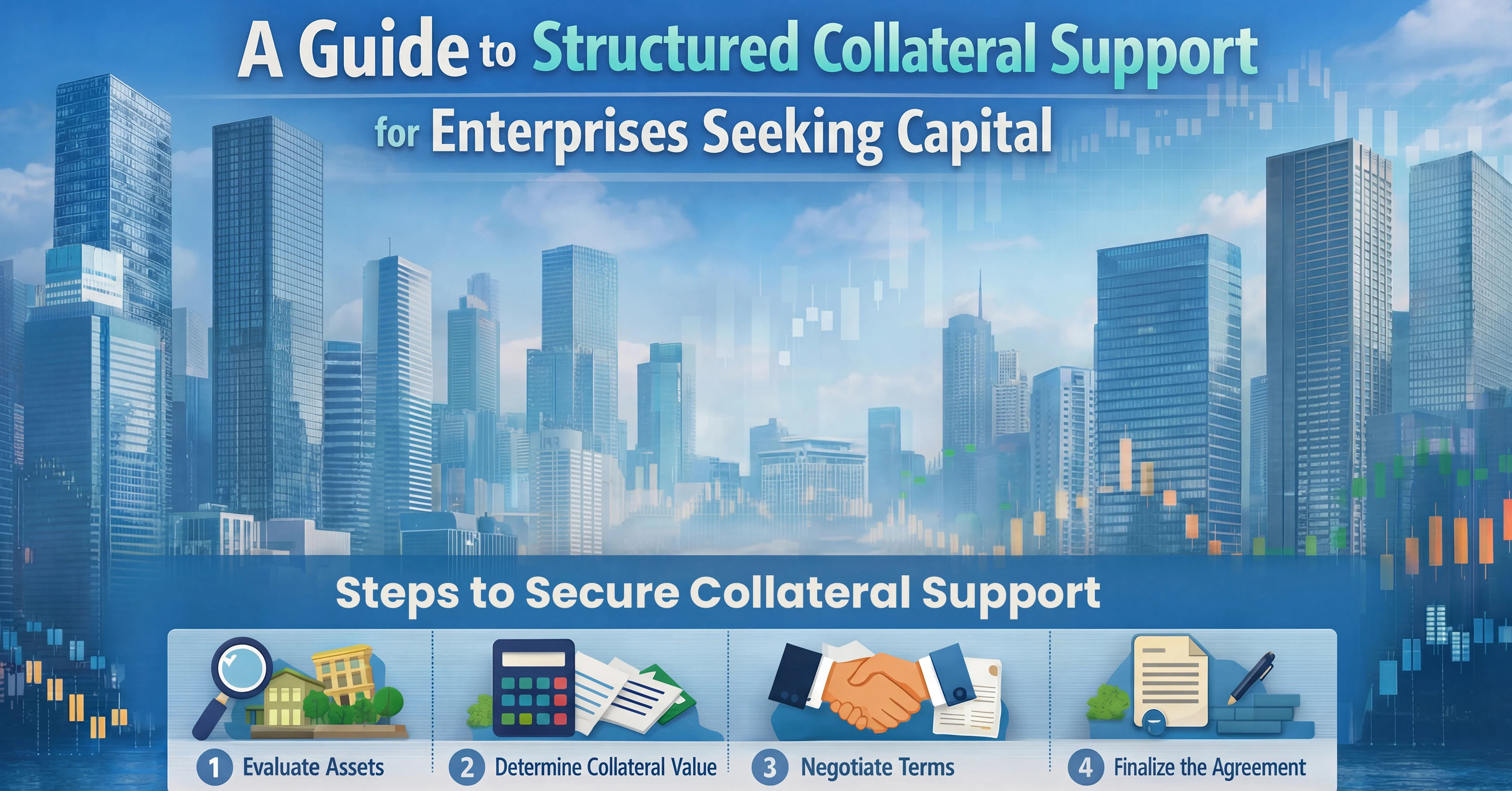
By providing landowner-backed collateral that lowers lender risk, collateral support for businesses enables large-scale financing. The steps involved in a company obtaining funding through collateral support are as follows:
- Enterprise Capital Assessment: Experts review the business’s financial audit reports, project plans and funding needs to determine the right loan amount and repayment structure.
- Collateral Identification or Partnership: The business identifies assets like real estate or machinery to secure. If internal assets aren’t enough, a third-party guarantor (like a director, owner, or family member with a strong financial history & presence) can provide security.
- Land Valuation & Legal Audits: Certified professionals appraise the asset’s market value, while legal checks confirm ownership, zoning compliance and freedom from existing claims.
- Collateral Structuring: The collateral is legally arranged and involves designing how assets are pledged, valued and managed to secure a loan or financial obligation of a business.
- Lender Selection: The business is connected with suitable lenders—banks, NBFCs, or institutional investors—based on the type of collateral and funding requirements and this is the main decision a business makes by selecting the suitable lender for itself.
- Term Sheet & Funding Process: Interest rates, repayment schedules and covenants are finalized, followed by signing the loan agreement and security documents.
- Capital Disbursement: Once all conditions are met, funds are released, enabling the business to execute large-scale expansions or operational projects immediately.
By navigating this structured process, enterprises can bridge the gap between their ambitious growth targets and traditional lending requirements. From initial assessment to final disbursement, collateral support provides a reliable framework that unlocks substantial institutional capital, turning underutilized assets into powerful tools for large-scale business development.
Benefits of Collateral Support for Growing Enterprises
Collateral support plays a crucial role in enabling growing enterprises to access finance and scale operations efficiently. By offering tangible or intangible assets as security, businesses can secure loans at favorable terms, reduce borrowing costs and build credibility with lenders. This support not only enhances financial flexibility but also allows companies to invest in expansion, technology and working capital, fostering sustainable growth while mitigating risk for both lenders and borrowers.
- Higher approval chances: Offering collateral increases lender confidence, making it easier for growing enterprises to obtain loan approvals. It demonstrates financial stability and commitment, reducing perceived risk and improving the likelihood of securing timely funding for business needs.
- Lower interest rates: Collateral-backed loans are considered less risky by lenders, often resulting in lower interest rates. Reduced borrowing costs enable businesses to allocate more funds toward growth initiatives rather than paying higher financing expenses.
- Longer repayment terms: Providing collateral allows enterprises to negotiate extended repayment periods. Longer tenures reduce the burden of monthly installments, improving cash flow management and supporting sustainable business operations without financial strain.
- Ability to raise capital quickly: Collateral enables faster access to funds, as lenders are assured of security. This quick capital injection helps businesses respond promptly to market opportunities, urgent expenses, or unexpected financial needs.
- Enables expansions, acquisitions, machinery purchase, inventory stocking, infra development: Collateralized loans provide the financial backing required for strategic investments like plant expansion, equipment upgrades, acquisitions, or inventory procurement, fueling business growth and enhancing operational capacity efficiently.
- Builds creditworthiness and reputation: Consistently managing collateral-backed loans strengthens a company’s credit profile. This enhances reputation with financial institutions, increasing the likelihood of future funding at favorable terms.
- Mitigates risk for both lenders and borrowers: Collateral reduces the lender’s risk exposure and encourages responsible borrowing. Enterprises benefit from structured financing, promoting prudent financial management and long-term stability.
Collateral support serves as a powerful financial tool for growing enterprises, enabling easier access to business growth capital, reduced borrowing costs and flexible repayment options. Beyond immediate capital needs, it facilitates strategic investments, strengthens creditworthiness and mitigates lender risk. By leveraging collateral effectively, businesses can accelerate expansion, enhance operational capacity and build a solid foundation for sustainable long-term growth, positioning themselves competitively in dynamic markets.
Real-World Use Cases
In this, we’ll see some real examples of how collateral-backed financing drives growth across industries. Companies in manufacturing, logistics, retail and technology leverage assets to secure loans, fund expansions, purchase equipment and manage working capital efficiently. These cases demonstrate how using collateral not only improves access to affordable credit but also strengthens operational stability, enhances financial flexibility and supports long-term sustainable business growth in competitive markets.
Now, if we look at some examples, then StarAgri’s growth journey highlights how effective collateral support can fuel large-scale business expansion. By developing a nationwide network of warehouses, the company created a strong physical asset base that enabled secure storage, procurement and trade facilitation for agricultural commodities.
Leveraging this infrastructure, StarAgri introduced warehouse receipt financing and collateral management services, allowing farmers and agri-enterprises to access loans against stored produce.
This approach transformed inventory into a reliable form of collateral, improving access to working capital and operational funding. As a result, StarAgri successfully expanded its warehousing footprint and financing capabilities across multiple states, strengthening both agricultural infrastructure and financial inclusion through asset-backed lending.
Hotel/Resort Development – Apeejay Surrendra Park Hotels
Park Hotels has successfully expanded its hospitality portfolio across India by leveraging structured financing and asset-backed term loans. This approach enabled the group to raise capital efficiently for hotel development and acquisitions, using balance sheet strength and project financing to fund new constructions and property renovations.
By combining financial strategy with operational execution, Park Hotels has strengthened its presence in both urban and resort destinations, supporting sustainable growth and enhancing its footprint in the competitive hospitality sector.
Solar/Infra Projects – ACME Solar Holdings
ACME Solar Holdings leveraged a Rs 1,072 crore domestic project finance facility to refinance its operational 250 MW solar plant in Rajasthan, demonstrating the strategic use of long-term debt to support large-scale renewable infrastructure. This structured financing not only strengthened the project’s financial viability but also positioned ACME Solar to expand its solar capacity further, contributing to India’s renewable energy goals and supporting sustainable growth in the clean energy sector.
Many real-world business cases clearly demonstrate the need for collateral-backed funding solutions to support sustainable growth. Platforms such as Asset2Loan simplify access to such financing by acting as a trusted intermediary, enabling businesses to leverage collateral not merely as security, but as a strategic growth provider.
By utilizing landowner-backed collateral—including warehouses, real estate, or equipment—as collateral, businesses can access growth capital more quickly and often at lower interest rates compared to unsecured financing. This enhanced access to capital strengthens cash flows and supports expansion initiatives such as new product launches, infrastructure upgrades and operational scaling.
Additionally, collateral support funding increases lender confidence, reduces the risk of default and enhances a company’s credit profile. It provides greater financial flexibility, allowing businesses to respond effectively to market opportunities, manage growth more efficiently and maintain long-term financial stability.
Role of Platforms Like Assets2Loan in Providing Collateral Support
Assets2Loan manages a critical financing gap in India, where strong businesses struggle to raise funds due to a lack of landowner-backed collateral. By connecting enterprises with pre-approved landowners and asset partners, they enable access to secured funding through structured, compliant and transparent asset-backed arrangements.
Their platform empowers small companies (MSMEs), mid-sized companies and startups to unlock growth capital without owning real estate. They believe that collateral is more than security—it is a growth enabler—they build trusted partnerships among lenders, asset owners and businesses, creating sustainable financial structures that support responsible scaling, protect value and turn assets into funds.
Services provided by assets2loan that not only make the business grow faster and stronger, but also push the potential of a business by providing a legally vetted approach to them and some of their services are:
- Verified landowners for third-party collateral: Connects businesses with genuine landowners for collateral-backed financing.
- Due diligence, valuation, documentation support: Ensures proper verification, asset valuation and legal paperwork for secure lending.
- Secure structured partnerships: Facilitates reliable agreements between lenders, borrowers and collateral providers.
- Faster access to lenders who prefer asset-backed deals: Speeds up capital access by linking businesses with lenders who favor secured loans.
- Transparent, trusted ecosystem: Maintains a credible, technology-driven platform ensuring clarity, trust and accountability for all parties.
Assets2Loan offers a reliable and efficient solution for businesses seeking collateral-backed funding. By providing verified collateral options, thorough due diligence, secure partnerships and fast access to lenders, it ensures safer and quicker funding.
Guidance through their end is legally approved and transparent, with a technology-driven ecosystem that builds trust among borrowers and lenders, reduces financing risks and enables companies to unlock business growth capital, support expansion and pursue strategic growth opportunities with confidence.
Conclusion: Collateral Support Is the Gateway to Large-Scale Capital in India
Collateral support plays a critical role in enabling Indian businesses to access large-scale capital by facilitating faster funding, competitive interest rates and more secure lending structures. By leveraging asset-backed financing, enterprises can strengthen cash flows, invest in infrastructure and scale operations with greater financial stability and confidence.
Collateral is not just a security requirement—it is often the missing link between business potential and capital access. Assets2Loan bridges this gap by enabling businesses without owned collateral to secure funding through verified third-party asset support. By connecting enterprises with trusted asset owners and lenders, Assets2Loan creates a structured ecosystem that unlocks growth-focused financing.
For businesses aiming to expand, scale operations, or fund development but constrained by the absence of balance-sheet assets, Assets2Loan acts as a strategic capital facilitator. Through compliant, risk-aligned collateral structures and expert guidance, Assets2Loan enables enterprises to access secured funding, reduce financing barriers, and pursue long-term growth without owning the underlying collateral.
Read More:
Connecting Businesses with Verified Landowners for Secure Collateral Partnerships