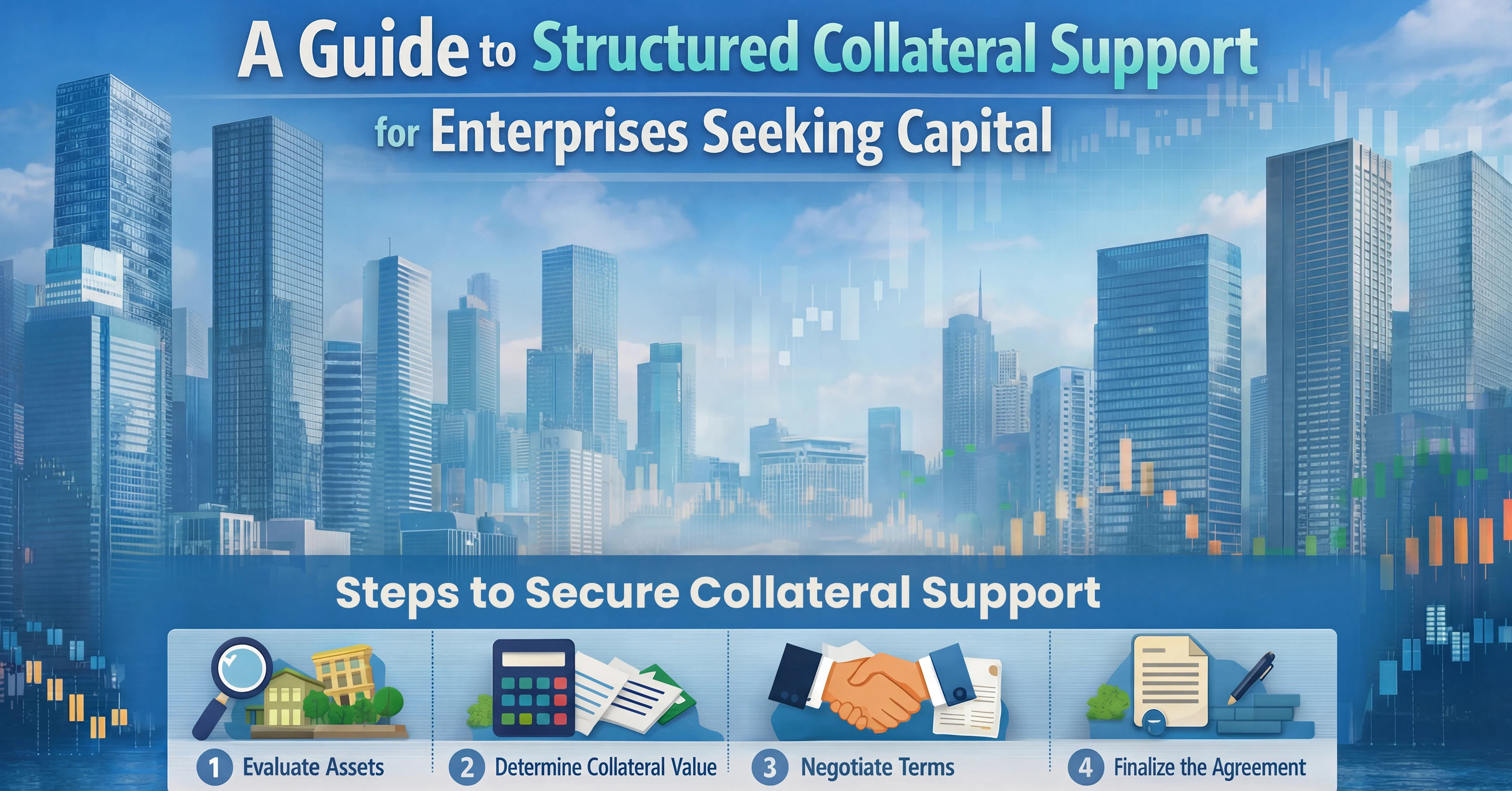
India doesn’t have a capital shortage; it has a collateral mismatch problem. High-growth businesses are ready to scale, but without tangible assets, they remain locked out of institutional capital. Even as of 2026, despite regulatory support like increased MSME collateral-free limits, access to large-scale funding remains constrained.
Institutional lenders continue to prioritise asset-backed lending, creating a structural gap for asset-light businesses. This issue is particularly acute in today’s economic climate, as India’s MSME sector faces a massive credit gap of ₹25 lakh crore as of 2026.
The root of the issue with raising capital without adequate collateral lies in the fact that most institutional lenders in India prefer asset-backed structures, creating a financing gap that disproportionately affects promising "asset-light" companies (tech, services, trading) that often cannot scale because they don't own "hard" collateral like land. This asset-backed structure problem is further complicated by increasing lender hesitation, as banks now prioritise Loan-to-Value (LTV) ratios within a strict range of 60% to 70%.
This is where trusted landowner partnerships emerge as the bridge between collateral and capital, a structured approach that allows businesses to unlock funding using third-party land without ownership.
The Collateral Bridge Model
At its core, bridging collateral and capital is not just a concept—it is a structured financial framework that aligns three key forces within the lending ecosystem:
- Businesses bring growth potential, scalability and revenue-generating capability
- Landowners contribute tangible, high-value assets that serve as collateral security
- Lenders deploy capital based on risk mitigation, asset backing and repayment capacity
This alignment transforms idle land into active financial infrastructure, enabling capital to flow where it is most productive. Instead of being constrained by balance sheet limitations, businesses can access institutional funding by leveraging external collateral through structured partnerships.
More importantly, this model shifts the paradigm of lending from ownership-based eligibility to access-based capital structuring. It allows high-potential enterprises to unlock large-scale funding without the need to own physical assets, while ensuring lenders remain protected through verified, asset-backed security.
In essence, the Collateral Bridge Model converts dormant assets into growth enablers, creating a seamless connection between capital demand and collateral supply in a trust-driven ecosystem.
Why Trusted Partnerships Are Essential
The strength of this entire model depends on one factor: trust. A partnership built on a foundation of integrity is not just a moral preference; it is a structural necessity that protects the financial interests of both the business seeking capital and the landowner providing the security. The core pillars of a trusted partnership are:
- Mitigation of Legal and Ownership Risks: A trusted partnership involves strict pre-verification of assets, which eliminates the risk of third-party claims stalling a project by ensuring the land is free from "encumbrances" or historical litigation.
- Absolute Operational Transparency: Trust is maintained through clear communication and "escrow-like" visibility. When both parties have access to the terms of the loan, the repayment schedule and the utilisation of funds, it removes the "information asymmetry" that often leads to disputes.
- Enhanced Lender Confidence for Faster Approvals: Financial institutions are naturally risk-averse. When a business presents a partnership backed by a vetted, "clean" title and a transparent legal agreement, it significantly lowers the lender's perceived risk.
- A Secure Foundation for Scale: Trusted ecosystems allow for long-term collaboration. Once a successful cycle of funding and repayment is completed, a "repeatable model" is established.
Ultimately, a trusted partnership acts as the "safety valve" in the collateral lending process. As lenders do not just consider the land, they also assess the business's ability to pay; such as, most Indian banks in 2026 require a minimum DSCR of 1.25x. This means for every ₹1 of debt (principal + interest), the business must generate ₹1.25 in net operating income. By prioritising clarity and legal strictness over short-term gains, businesses and landowners can foster a professional environment where capital flows freely and risks are systematically managed.
What Are Landowner Partnerships?
In the modern financial framework, a landowner partnership is a formal arrangement in which a verified landowner acts as a "Third-Party Mortgagor" (an entity or individual who pledges their property to secure a loan for another person) to secure credit for high-growth businesses.
This partnership becomes the operational bridge that connects asset-light businesses to institutional capital.
This method of raising funds and business expansion enables businesses, particularly those in asset-light sectors like technology or services, to raise high-value loans through a strategic pledge. Critically, ownership remains intact; the land is only pledged as security, not transferred.
The landowner provides the security on behalf of the business, which, in turn, uses the capital to scale; it automatically enables the business to raise high-value loans. This creates powerful commercial synergy by transforming an idle asset (land) into an active financial tool for business growth.
The Collateral Bridge Model differs significantly from traditional lending structures:
|
Feature |
Traditional Mortgage |
Landowner Partnership |
|
Borrower Profile |
The individual/entity that owns the property must also be the borrower. |
The business (Borrower) and the Landowner (Third-Party Mortgagor) are separate entities. |
|
Asset Utilization |
Typically used for personal or existing business assets already owned. |
Enables bridging collateral and capital for asset-light firms that do not own land. |
|
Collateral Source |
Internal (owner-provided). |
External (Provided by a strategic partner via a strategic pledge). |
|
Role of Landowner |
Directly responsible for loan repayment and operations. |
Acts as a Third-Party Mortgagor, offering the "Right to Mortgage" to support the firm. |
|
Purpose of Capital |
Often restricted to the asset owner's personal or direct business needs. |
Focuses on enterprise funding support for high-growth, scalable business models. |
|
Economic Synergy |
Single-party risk and reward. |
Creates commercial synergy by turning an idle asset into a productive financial tool. |
|
Loan Type |
Usually limited to the value of the owner's specific holdings. |
Provides access to collateral backed capital by matching the business need with a verified land partner. |
Why Collateral Is the Missing Link in Enterprise Funding?
The biggest bottleneck in scaling is not demand; it’s the inability to bridge collateral with capital. The government is helping small businesses, or any enterprise needing more than ₹20 lakh (which is almost all growth-stage companies), but still hit the "collateral wall." This makes landowner partnerships not just an option but a necessity for scaling.
Large projects require high collateral security to meet the risk-mitigation requirements of institutional lenders. While an enterprise might have a flawless track record, even enterprises with strong business models still face funding barriers without collateral, whether it's unsecured or secured.
This "collateral gap" forces firms into the unsecured market, where unsecured loans have major limitations: low ticket size, high interest and strict criteria. In 2026, unsecured loans range from 16% to 24% p.a., often capped at ₹50 lakh to ₹2 crore.
The choice of bridging collateral and capital is most evident in the dramatic shift in borrowing terms. By securing enterprise funding support through collateral-backed capital, companies can access secured loans (2026) ranging from 8.5% to 11%; with landowner collateral, interest rates drop significantly to 9.50%–13% p.a. This transition doesn't just lower costs; it provides the structural stability needed to navigate a competitive global economy.
|
Feature |
Unsecured Loans |
Landowner-Backed (Secured) |
|
Interest Rates |
14% – 22% |
8.5% – 11% |
|
Loan Ceiling |
Capped at ₹5 – 10 Cr |
Up to ₹500+ Cr |
|
Loan Tenure |
3 – 5 Years |
15 – 17 Years |
|
Scale Potential |
Restricted / Working Capital |
High / Infrastructure & Expansion |
How Landowner Partnerships Work: Step-by-Step Flow
Landowner partnerships represent a complex financing mechanism that unlocks the latent value of real estate to facilitate corporate growth. This collaborative model allows businesses to secure high-value loans by using third-party land as collateral, creating a symbiotic relationship between capital-hungry companies and asset-rich landowners. The Collateral Bridge Model operates through a structured execution process:
1. Defining Capital Requirements
The first step for every business is conducting a strict internal audit to determine its financial needs, which involves specifying the loan amount, the purpose of the funds (such as expansion or R&D) and the projected repayment timeline. A clear financial roadmap is essential to ensure the partnership is viable and that the business can service the resulting debt without compromising its operational stability.
2. Landowner Identification & Matching
After the funding requirement determination, a specialised platform or intermediary identifies landowners whose properties meet specific eligibility criteria. These criteria often include clear land titles, strategic locations and a lack of existing encumbrances. The goal is to match a business with a partner whose asset value aligns with the required loan-to-value (LTV) ratios of institutional lenders.
3. Verification and Valuation
This is a critical due diligence phase, where legal experts verify the "chain of title" to ensure the land is free of legal disputes, while certified valuers determine the current market price. This step provides the "true value" of the collateral, which determines the maximum funding amount a bank or NBFC is willing to disburse.
4. Structuring the Partnership Agreement
A formal legal contract is drafted to define the terms between the businessman and the landowner. This agreement outlines the consideration (the fee or equity stake given to the landowner), the risk-sharing ratios and a clear "indemnity clause" to protect the landowner’s interests in case of a business default.
5. Presenting Collateral to Lenders
After signing the contract, the business approaches financial institutions with a combined proposal that includes its financial track record and the newly secured land collateral. The partnership enhances the business's credit profile, often leading to lower interest rates and more favourable terms than with unsecured financing.
6. Funding Approval and Loan Disbursement
Once the lender is satisfied with the valuation and the business's financial strategy, the funds are released. This provides the liquidity needed to execute the company’s growth plans. During this time, the lender holds the land title deeds as security.
7. Repayment and Closure
Once the debt is fully settled, the lender issues a "No Objection Certificate" (NOC) and releases the original land documents. The partnership is then formally closed and the landowner receives their final settlement or reclaimed asset.
Overall, by leveraging third-party land, a company can secure high-value institutional funding at significantly lower interest rates compared to unsecured business loans. Also, it preserves the company’s internal cash flow and liquidity, allowing management to divert capital toward core operational growth rather than tying it up in real estate.
The Role of Verified Landowners in Bridging the Gap
The traditional financial lending model often restricts a business to its own balance sheet and assets. Trusted landowner partnerships change this dynamic by positioning landowners as "collateral providers" for high-potential businesses by bridging the gap. Since most mid-to-large projects require capital of ₹10 crore to ₹500 crore, the gap between the ₹20 lakh "safe zone" and actual capital needs is massive, underscoring the need for landowner partnerships.
A landowner partner allows the business to focus on operational excellence while the landowner provides the structural security required for bridging collateral and capital. By using this collaborative approach, even "asset-light" companies can access the enterprise funding support typically reserved for large-scale industrial giants. However, the success of this model rests entirely on the importance of verification, clean titles and legal clarity.
In 2026, the landscape of security has been revolutionised by Bhu-Aadhaar (ULPIN) Integration. Verification now utilises this 14-digit Unique Land Parcel Identification Number, which ensures zero boundary disputes and provides a "single source of truth" for lenders.
To meet the Clean Title Standard, properties must now present a comprehensive 30-year "Search and Trace" report and must be certified free from any SARFAESI Act proceedings. This level of transparency ensures that the collateral-backed capital is built on a stable, dispute-free foundation.
When properly structured, verified partnerships protect both the business and the lender through a clear legal framework and strict KYC Compliance. Landowners today undergo stringent "Anti-Money Laundering" (AML) checks to ensure the security provided is truly "lender-grade."
Lender-Grade Security Checklist (2026 Standards)
|
Bhu-Aadhaar (ULPIN) |
Valid 14-digit digital land ID |
|
Search & Trace |
Clear history of title for the last 30 years |
|
SARFAESI Status |
Zero pending recovery proceedings |
|
AML/KYC |
Verified landowner identity and fund sources |
Benefits for Enterprises
For growth-stage businesses, the real limitation is not opportunity; it’s balance sheet constraints. The Landowner Partnership model serves as a strategic financial lever, allowing companies to decouple their operational potential from their balance sheet limitations.
By accessing third-party collateral, businesses can transition from modest growth to aggressive market leadership without the capital-intensive burden of direct land acquisition.
Key Strategic Benefits for Enterprises
- Access to Third-Party Collateral: The landowner partnership model allows companies to secure debt using assets they do not personally own. It bridges the "collateral gap" for asset-light firms, enabling them to leverage premium real estate to back their ambitious corporate objectives.
- Eligibility for High-Value Funding: By providing high-quality land as security, enterprises become eligible for large-ticket loans ranging from ₹10 Cr to ₹ 500 Cr+. This magnitude of capital is essential for funding massive industrial projects or nationwide infrastructure rollouts.
- Optimisation of Borrowing Costs: Strong physical security significantly reduces the risk profile for banks and NBFCs. Consequently, enterprises can negotiate much lower interest rates compared to unsecured credit, resulting in substantial long-term savings on debt servicing.
- Catalyst for Rapid Expansion: With immediate access to significant liquidity, businesses can decisively execute mergers, acquisitions, or capacity expansions. This agility allows businesses to seize market opportunities instantly, rather than waiting years to build up internal cash reserves.
|
Feature |
Unsecured Enterprise Funding |
Landowner Partnership Funding |
|
Loan Amount (Ticket Size) |
₹10 Lakh – ₹2 Crore |
₹10 Crore – ₹500+ Crore |
|
Average Interest Rate |
18% – 24% |
9.5% – 12.5% |
|
Tenure |
Short (1–3 years) |
Long (5–15 years) |
|
Primary Security |
Cash flow/Business Vintage |
Verified Real Estate Collateral |
|
Processing Speed |
Fast (Digital) |
Moderate (Due Diligence required) |
8. Benefits for Landowners
In India, land is a "frozen" asset, high in value but low in liquidity. Historically, the only way to extract wealth from a plot was to sell it entirely, losing out on future appreciation. However, the emergence of trusted landowner partnerships has created a new normative framework. By bridging the gap between collateral and capital, landowners can finally treat their property as a dynamic financial engine rather than a stagnant cost centre.
Here are the primary benefits of entering into a structured partnership:
- Monetisation Without Divestment: The most compelling advantage is the ability to generate liquidity from unused or idle land without selling. As a landowner, retaining title and long-term ownership allows one to benefit from the property’s natural appreciation while extracting immediate value.
- Consistent Returns and Structured Fees: Instead of waiting for a "big payday" that may be years away, partnerships offer structured fee arrangements or profit-sharing models. This provides a predictable stream of income, turning a non-productive asset into a high-yield investment.
- Mitigated Risk Through Contract-Backed Security: These partnerships are built on institutional-grade, legally binding frameworks. With secure, contract-backed protections, landowners' rights are prioritised, ensuring the land is used only for agreed-upon purposes and that there are clear exit strategies.
- Strategic Income Diversification: Relying on a single revenue stream is a risk. By activating your land, you create a secondary or tertiary income pillar. This diversification provides a financial safety net and balances your portfolio against market volatility in other sectors.
- Professional Development and Infrastructure Uplift: Partnerships often bring in expert developers or industrial operators who improve the land’s utility. This "sweat equity" from partners can increase the baseline value of the landowner's property, such as through clearing, zoning changes, or utility installations at no direct cost to you.
- Wealth Preservation for Future Generations: By choosing a partnership over a sale, you keep the asset within your family legacy. Landowners are essentially "renting out" the land's potential to the capital market today while ensuring the physical earth remains a legacy for your heirs tomorrow.
By shifting the perspective from land as a static resource to land as active collateral, owners can unlock the capital they need to grow, pivot, or reinvest, all while keeping their most valuable asset firmly in their hands.
Real Business Use Cases
To truly understand the power of bridging collateral and capital, one must look at how these deals function in the field. These aren't just paper transactions; they are high-impact strategies where trusted landowner partnerships provide the bedrock for industrial and commercial breakthroughs. When an enterprise can access collateral-backed capital without the burden of land acquisition, the speed of growth accelerates exponentially.
These partnerships realise enterprise funding support in four real-world applications:
Manufacturing Unit Expansion:
Consider a specialised automotive parts manufacturer that needs to install a new robotic assembly line to meet a global contract. While their cash flow is strong, their credit limit is capped. Through a partnership, a local landowner pledges a 2-acre industrial plot as security for the manufacturer’s expansion loan. This collateral-backed capital allows the factory to double its output immediately. The landowner receives a structured "collateral usage fee," turning a quiet asset into an active participant in the supply chain.
Logistics or Warehouse Hubs:
An e-commerce firm needs a distribution centre near a strategic port but wants to keep its capital "light" for inventory, not real estate. By forming a trusted landowner partnership, the firm uses the owner's prime land to secure a construction-cum-term loan. This provides the necessary enterprise funding support to build a modern warehouse. The landowner benefits from a massive infrastructure uplift on their property and a share of the long-term rental yields.
Hospitality and Infrastructure Projects:
A hotel group identifies a perfect coastal location but faces high interest rates for unsecured development loans. By bringing the landowner in as a strategic partner, the land itself serves as the equity contribution for the bank. This method of bridging collateral and capital lowers the project's risk profile, resulting in better loan terms. The landowner retains their title while gaining an interest-bearing stake in a multi-million dollar resort.
Trading Business Working Capital:
A commodity trader has the opportunity to buy a massive shipment of grain at a discount but lacks the immediate liquidity. By utilising a third-party commercial plot as security, the trader secures an enhanced "Overdraft" or "Cash Credit" limit. This collateral-backed capital allows the trader to execute the deal. The landowner receives a significant fee for providing the "credit cushion," ensuring their land generates profit without any dirt ever being moved.
By integrating these strategies, businesses can scale without limits and landowners can finally unlock the hidden wealth beneath their feet through professional enterprise funding support.
The Future of Collateral Partnership Models in India
The future of finance in India will be defined not by capital availability, but by how efficiently collateral is activated. As traditional credit markets become more competitive, we are seeing a massive evolution in how property is utilised to fuel economic growth. The future of bridging collateral and capital in India lies in moving away from rigid, legacy systems toward a more fluid and inclusive ecosystem. Several key trends are defining this new era:
- Rise of Alternative Lending Structures: The days of simple, one-dimensional bank loans are fading. Businesses are witnessing the emergence of "hybrid" financing where enterprise funding support is structured through sophisticated revenue-sharing models and mezzanine financing. Landowner partnership structures allow businesses to scale without the crippling weight of high-interest unsecured debt.
- Widespread Acceptance of Third-Party Collateral: Perhaps the most significant shift is the increasing openness of institutional lenders toward non-owner-occupied security. Banks and NBFCs are now more comfortable with collateral-backed capital originating from a third party, provided the legal framework is sound. This acceptance of third-party collateral is opening doors for landowners who previously had no "seat at the table" of industrial growth.
- Digital Platforms as Trust Engines: Transparency has historically been the biggest hurdle in Indian real estate. However, the rise of specialised digital platforms is solving this by providing verified data, standardised documentation and transparent matchmaking. These platforms are the primary catalysts for trusted landowner partnerships, ensuring that every stakeholder is protected by a digital trail of accountability.
As India moves toward its goal of becoming a multi-trillion-dollar economy, the ability to activate "dead" land assets will be a primary driver of success. By effectively bridging collateral and capital, India is not just unlocking land value; it is unlocking the future of entrepreneurship itself.
Every acre of idle land represents a missed opportunity for enterprise funding support, as idle land yields 0% cash flow. In a structured partnership, landowners can earn a "Collateral Fee" or "Guarantee Commission" typically ranging from 1% to 3% per annum of the collateral value or equity upside in the project and the coming years will see that potential finally realised on a national scale.
Why Platforms Like Assets2Loan Are Key to Successful Partnerships
While the model is powerful, execution requires a structured ecosystem. For a partnership to be truly "trusted," it requires more than just a handshake; it requires a highly developed ecosystem that balances risk and opportunity. This is where specialised platforms like Assets2Loan become essential, acting as the bridge that connects high-potential land with the capital markets.
Here is why a platform-driven approach is essential for success:
- Access to a Verified Network: Assets2Loan maintains an expansive network of verified landowners across diverse regions. This vetting process ensures that every partnership begins on a foundation of legitimacy, eliminating the "search friction" and uncertainty that often plague private land deals.
- End-to-End Administrative Oversight: The "heavy lifting" of legal compliance, professional valuation and meticulous documentation management is handled by a platform like Assets2Loan. This ensures that every asset is "loan-ready" and that all paperwork meets institutional standards.
- Secure Matchmaking: The platform acts as a neutral, secure matchmaker, connecting enterprises in need of collateral with landowners seeking returns. By focusing on compatibility, Assets2Loan ensures that both parties’ goals are perfectly synchronised.
- Rigorous Contractual Protections: Transparency is the bedrock of trust. Assets2Loan facilitates structured agreements designed to protect both sides. These contracts clearly define rights, liabilities and timelines, leaving no room for ambiguity.
- Deep Lender Relationships: Perhaps most importantly, the platform maintains strong relationships with a wide array of lenders who specifically accept third-party collateral. This bridge to the banking sector ensures that the partnership actually results in the desired outcome: liquidity.
By leveraging the expertise of Assets2Loan, landowners and enterprises can bypass the traditional hurdles of property-backed finance, turning complex negotiations into seamless, wealth-generating collaborations. As Assets2Loan uses platforms like Digital Land Records and AI-based valuation to reduce the "title search" time, which traditionally takes 21 days in India, down to under 7 days, speeding up the disbursement cycle significantly.
Conclusion: Trusted Landowner Partnerships Unlock Growth Capital
The future of business expansion no longer requires the heavy burden of land acquisition. As we have explored, the strategic shift toward bridging collateral and capital creates a powerful "win-win" for the Indian economy. For enterprises, trusted landowner partnerships provide the essential enterprise funding support needed to scale operations, while landowners finally gain a pathway to monetise idle assets without surrendering their long-term heritage.
However, the success of this model hinges on precision. The importance of strict verification, professional valuation and legally ironclad, structured agreements cannot be overstated. Transparency is the currency of these collaborations; without it, the bridge between property and liquidity collapses.
This is where Assets2Loan steps in. By providing a secure, tech-enabled ecosystem for collateral-backed capital, we ensure that both parties are protected, verified and aligned for growth. Whether you are a business looking to break through a credit ceiling or a landowner ready to activate your property’s hidden potential, the right partnership is your most valuable asset.
Ready to unlock the power of your land or secure the capital your business deserves? Connect with Assets2Loan today to explore secure, transparent and high-impact collateral partnerships. Let’s build the future of the Indian industry together.